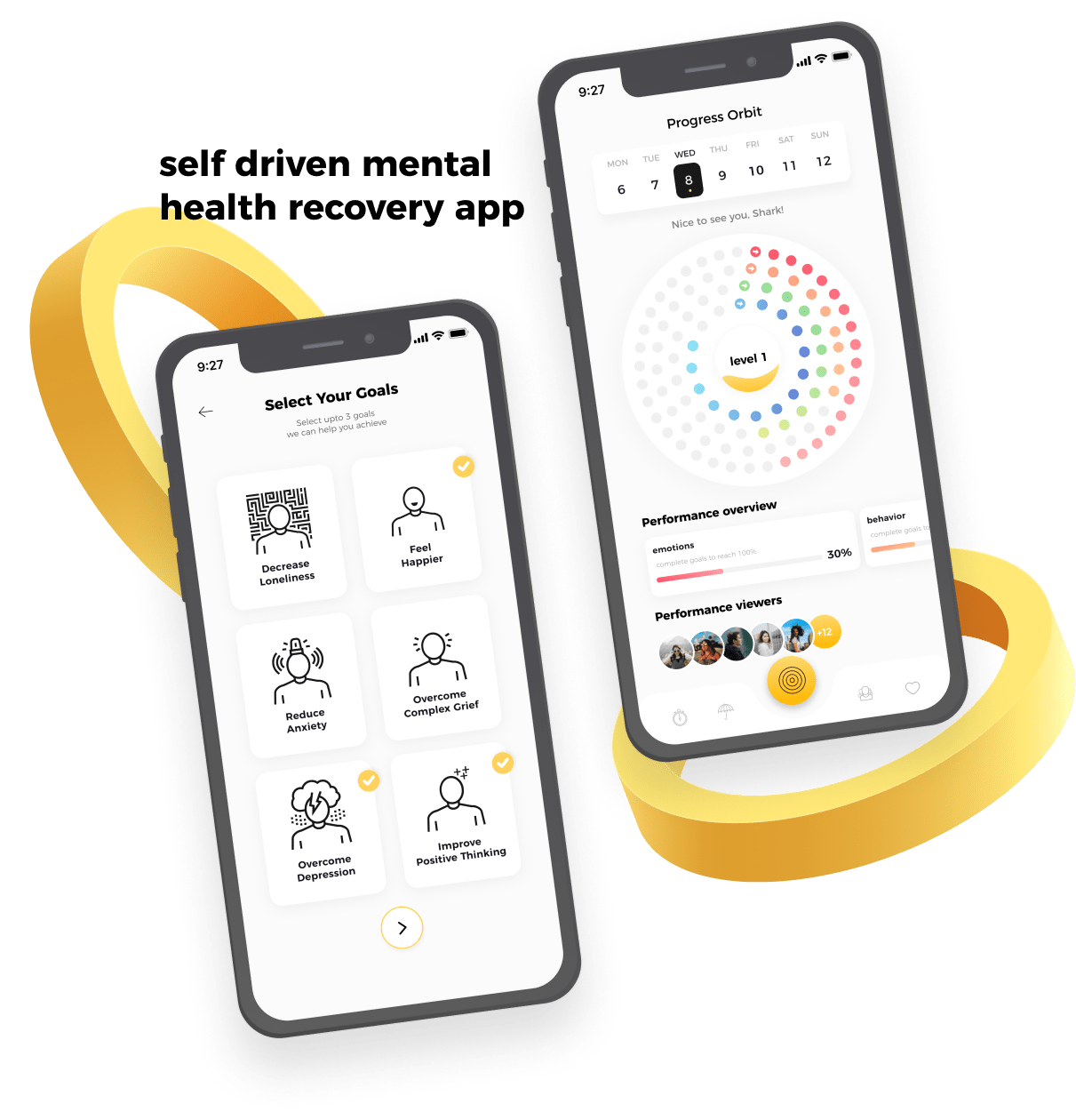
Orbitus provides a digital platform that collects, combines and analyses user data to detect mental health state and share it with relevant people, helping track recovery progress. It also builds a community of supportive users around you facing or having faced similar disorders — with an easy-to-understand visual data model.
why orbitus?
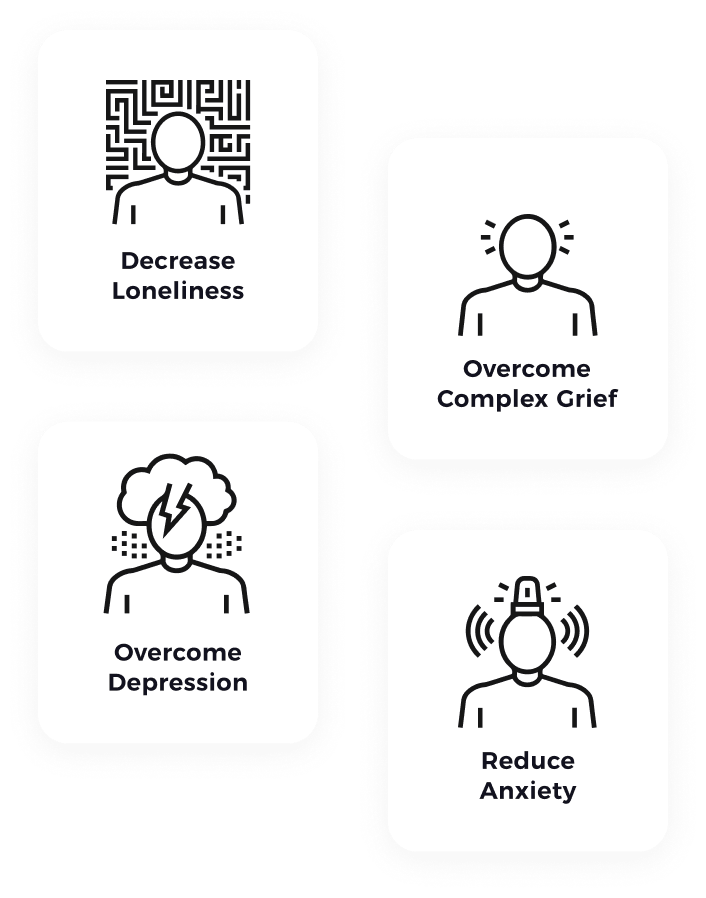
"One in six people is affected by mental disorder" - WHO
Mental health disorders, such as depression, anxiety, loneliness & complex grief, affect millions of people worldwide. They are common, highly disabling, and associated with premature mortality. Orbitus can be a small help to decrease the count by helping people recover.
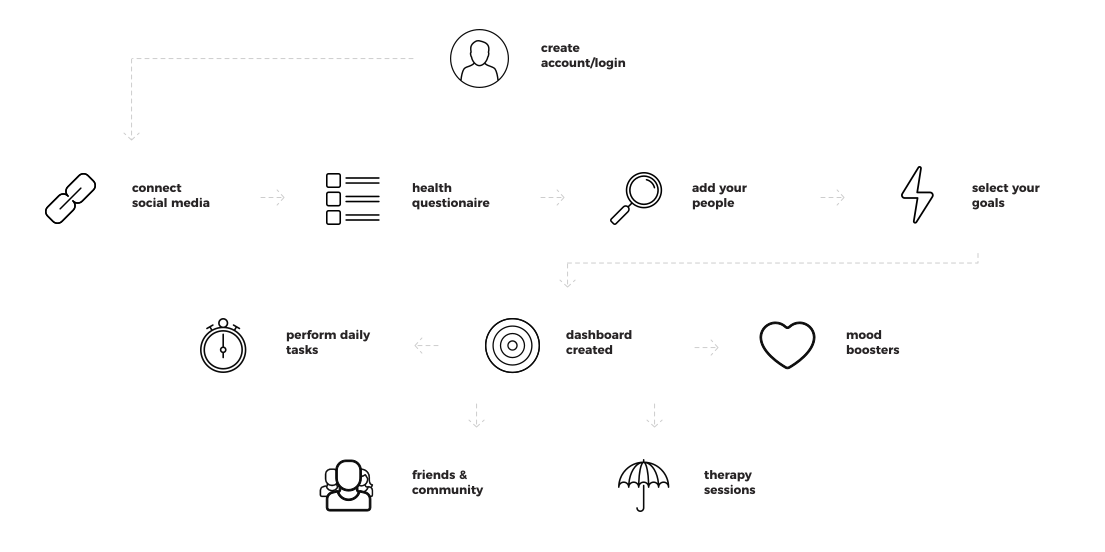
user journey
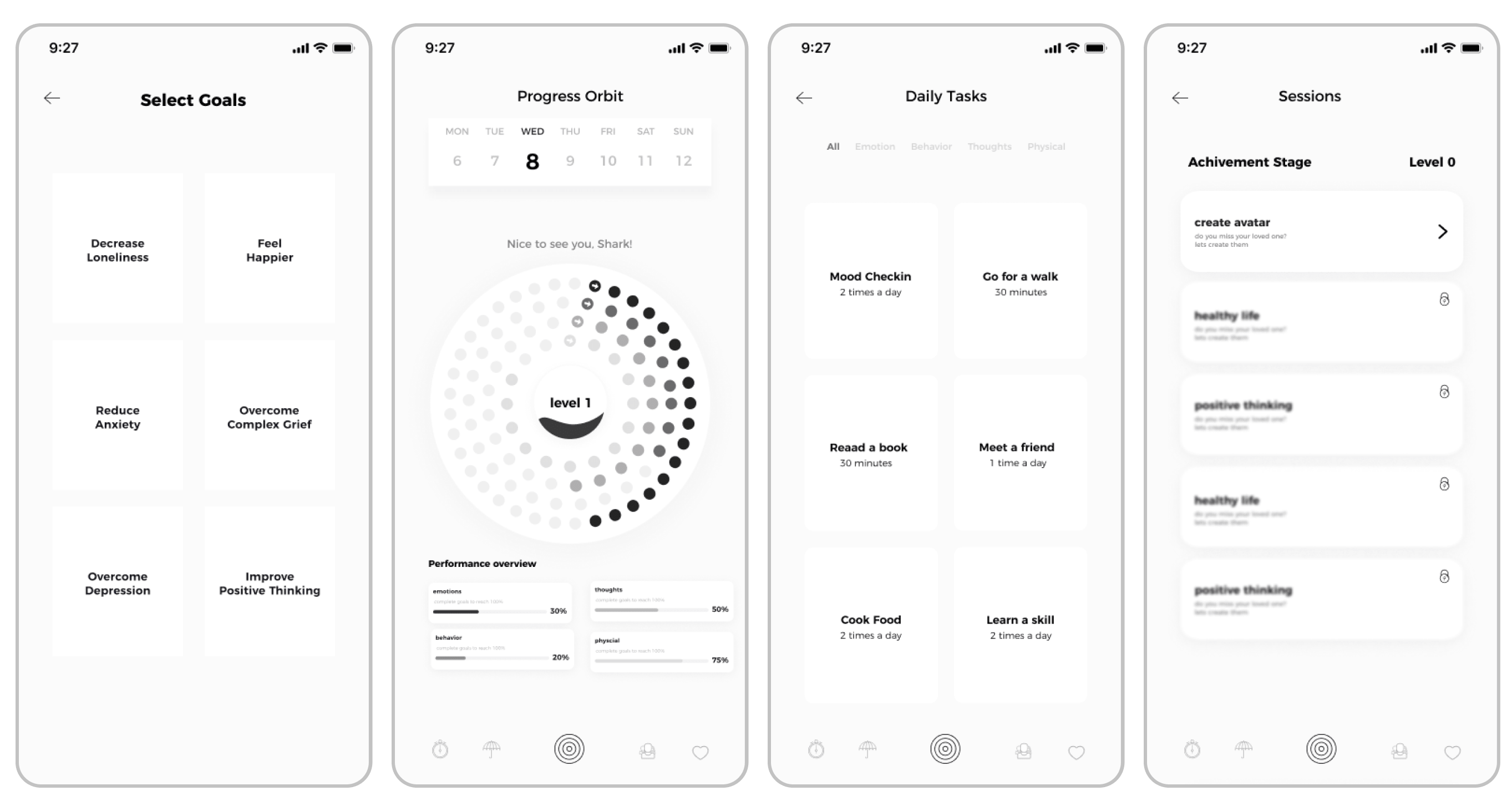
On the basis of the research I conducted and other information I collected, I created an overview of functions and content per screen — always mapping the flow that defines the whole user journey.
wireframes
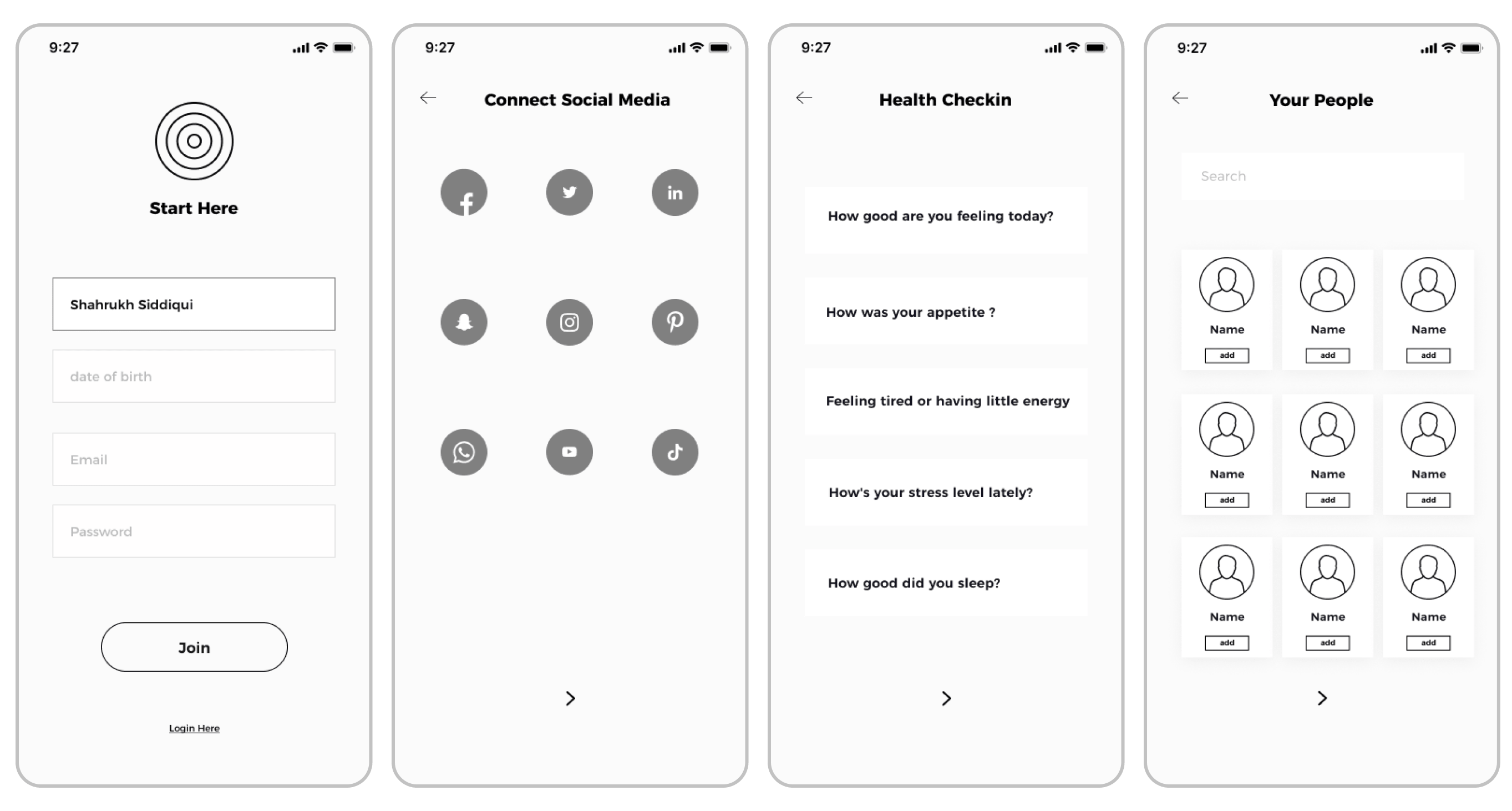
Wireframes arrange elements and craft content and functionality on each page, accounting for user needs and journeys. Their simplicity let me quickly test before taking the next step.
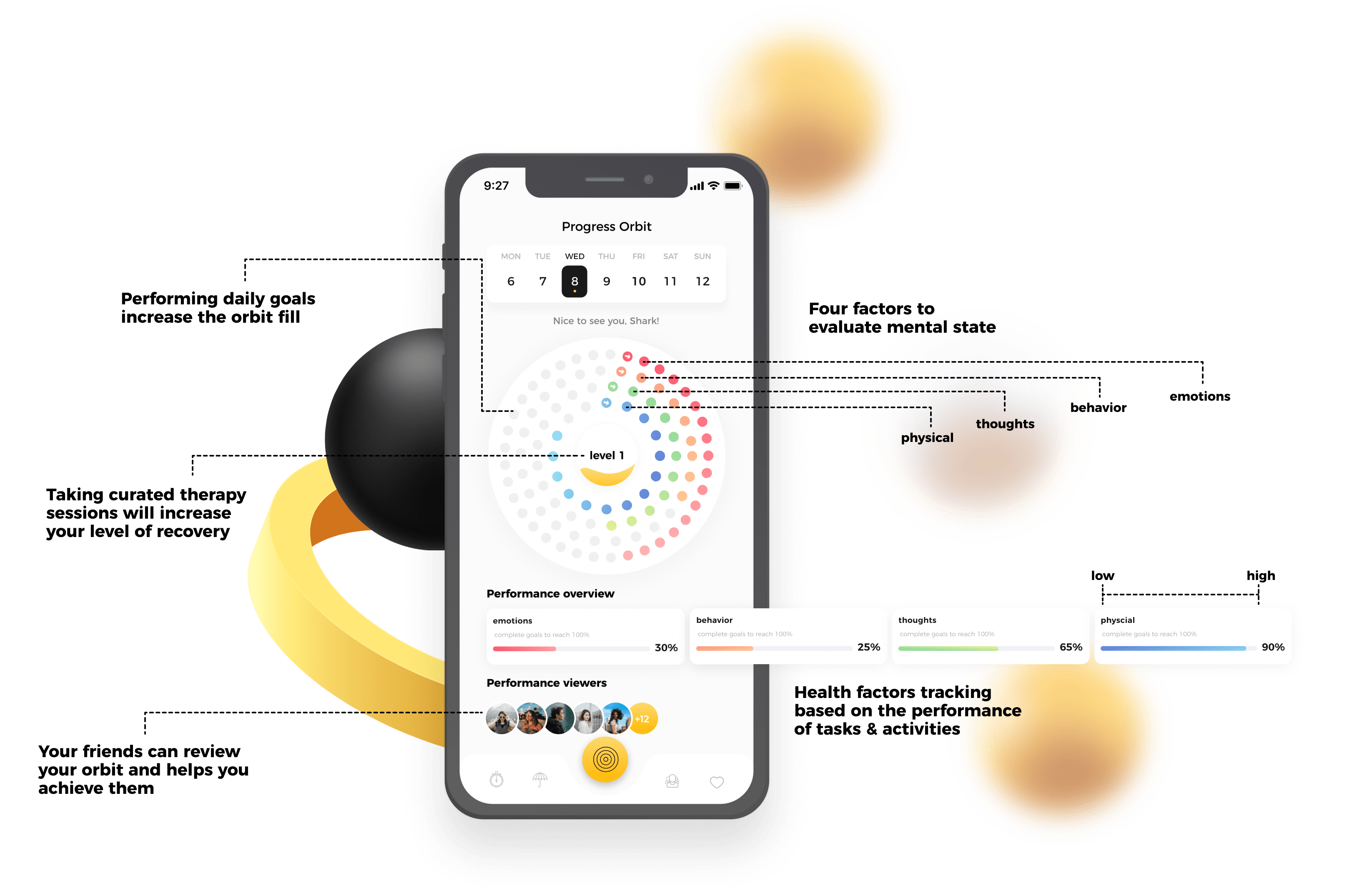
data mirror component
Mental health depends on four factors — emotions, behavior, thoughts and physical state. The data component is an Orbit with four rings, each a health factor in a unique color, filled as daily tasks are performed. The center holds an achievement meter that rises with therapy sessions completed.
interface meets experience
Orbitus is all about self-management and recovery of mental health — the visuals are crafted for easy onboarding. Here is the end result of the screens where UI meets UX, backed by data that validates design decisions. The interface is bright, colorful and enjoyable to use.
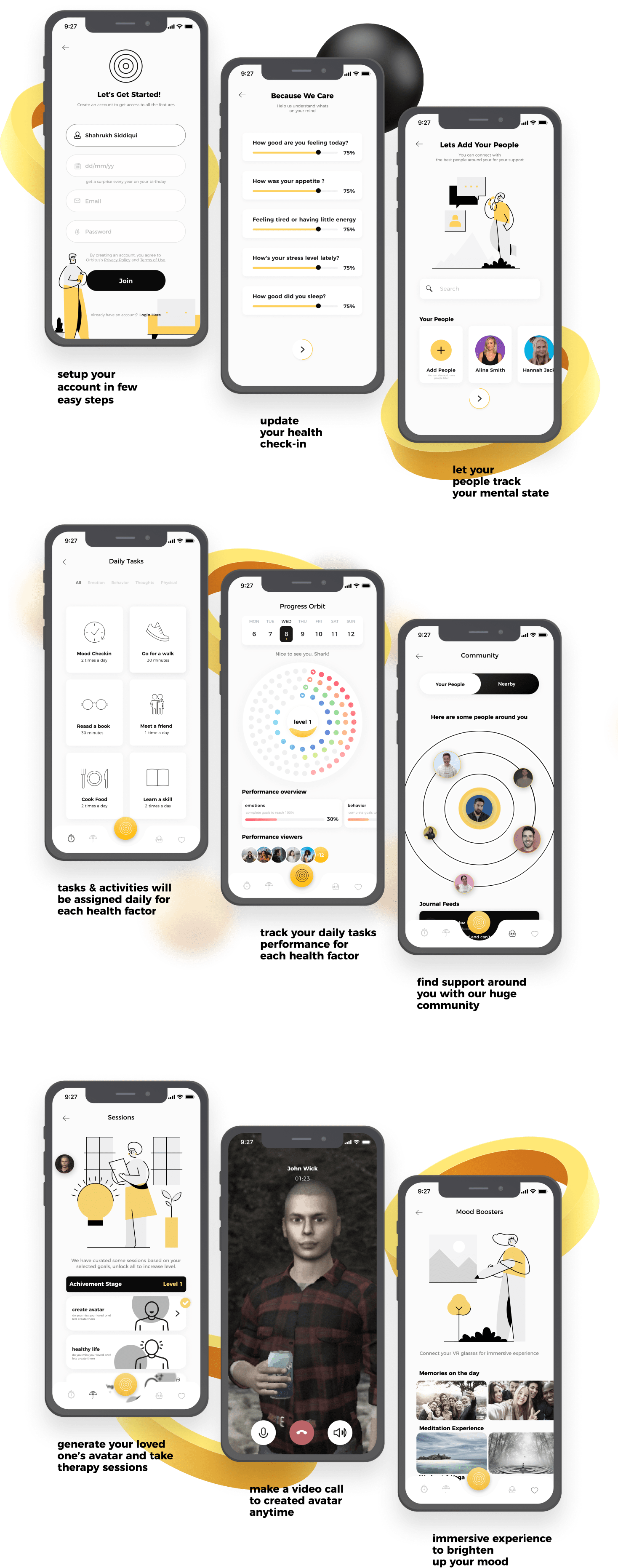
Orbitus supports coping with anxiety, depression, stress and loneliness through live therapy sessions, self-care tasks, and a community that understands you.